
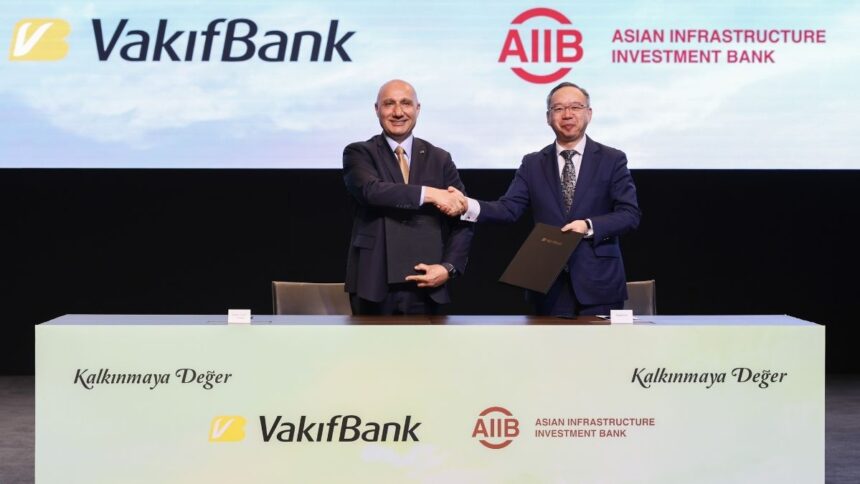
VakıfBank has launched its Energy and Transformation Finance Program with US$300 million in funding from the Asian Infrastructure Investment Bank (AIIB), supporting both post-earthquake reconstruction efforts and the green transformation of Türkiye’s small and medium-sized enterprises (SMEs).
The initiative marks the first collaboration between VakıfBank and AIIB and is designed to provide long-term financing for projects aligned with Türkiye’s sustainable development objectives, ranging from rebuilding infrastructure in earthquake-affected regions to accelerating investments in renewable energy and industrial decarbonization.
Supporting Reconstruction and Sustainable Growth
Developed under VakıfBank’s Value Banking for Development (KODEB) strategy, the program combines economic recovery with climate-focused investment by directing international financing toward priority sectors of the Turkish economy.
The first pillar of the program focuses on reconstruction efforts across the 11 provinces affected by the February 6 earthquakes. Financing will be made available to contractors involved in the construction of social housing, public schools, hospitals, and healthcare facilities.
Working capital loans will support expenses such as payroll, social security contributions, construction materials, and labor costs, while investment loans will finance machinery and equipment purchases. Eligible businesses can access financing of up to US$10 million per risk group.
Accelerating SMEs’ Green Transformation
The second component of the program is dedicated to helping SMEs invest in low-carbon technologies through four specialized financing products: Energy Efficiency Loans, Renewable Energy Loans, Industrial Decarbonization Loans, and Clean Transportation Loans.
The financing will support projects including solar and wind energy installations, battery energy storage systems, electric vehicle charging infrastructure, industrial emissions reduction technologies, commercial electric vehicles, fleet electrification, and smart fleet management solutions.
VakıfBank expects these investments to strengthen energy efficiency, reduce Türkiye’s dependence on imported energy, and contribute to lowering the country’s current account deficit.
Long-Term Development Strategy
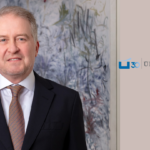
VakıfBank CEO Osman Arslan said the bank views financing as a strategic tool for supporting Türkiye’s long-term development priorities.
“We see finance as a strategic instrument that contributes to our country’s development goals. This understanding lies at the heart of our Value Banking for Development vision,” Arslan said.
“The US$300 million funding secured from the Asian Infrastructure Investment Bank demonstrates both international confidence in VakıfBank and our commitment to supporting Türkiye’s sustainable development objectives.”
Arslan added that supporting SMEs’ green investments is becoming increasingly important as companies prepare for the European Union’s Carbon Border Adjustment Mechanism and Türkiye’s target of achieving net-zero emissions by 2053.
AIIB Reinforces Climate and Recovery Partnership
Gregory Liu, AIIB’s Director General for Financial Institutions and Funds, said the financing reflects the bank’s commitment to supporting Türkiye during a critical recovery period while keeping climate action at the center of the partnership.
“By partnering with VakıfBank, we are helping accelerate reconstruction efforts while enabling SMEs to make meaningful contributions to Türkiye’s climate transition,” Liu said.
Aligned with Türkiye’s Net-Zero Goals
As one of Türkiye’s leading providers of sustainability-linked financing, VakıfBank said the Energy and Transformation Finance Program supports the country’s Medium-Term Program, the 12th Development Plan, and the national objective of achieving net-zero greenhouse gas emissions by 2053.
Through the initiative, the bank aims to contribute simultaneously to post-earthquake reconstruction, sustainable industrial production, and the green transformation of the real economy.
Why It Matters
The US$300 million partnership highlights the growing role of international climate finance in supporting Türkiye’s economic development. By combining disaster recovery with investments in renewable energy, industrial decarbonization, and clean transportation, the program addresses both immediate reconstruction needs and the country’s long-term transition toward a more resilient and low-carbon economy.