
Turkish enterprise software startup Spaceflow has been accepted into the Summer 2026 batch of Y Combinator, one of Silicon Valley’s most prestigious startup accelerators, while also securing $1 million in funding just months after its launch.
Founded at the beginning of 2026 by a team of young Turkish entrepreneurs, Spaceflow is building infrastructure designed to help enterprises transition their software environments for the era of artificial intelligence agents.
The company was accepted into the Summer 2026 cohort of [Y Combinator](https://www.ycombinator.com?utm_source=chatgpt.com), a startup accelerator widely regarded as one of the most competitive programs globally and known for backing companies such as Airbnb, Stripe, Dropbox, Coinbase and Reddit during their earliest stages. Acceptance rates for the program typically remain below 1%, making admission a significant validation for early-stage startups.
Building the infrastructure for agent-native enterprises
Spaceflow aims to address what its founders view as one of the key limitations of enterprise software in the AI era: most existing systems were designed for human users rather than autonomous AI agents.
The startup’s platform transforms existing enterprise systems such as ERP platforms, email infrastructure and spreadsheets into what it describes as a “company brain” that artificial intelligence agents can securely access, understand and operate across.
These AI employees are designed to execute business processes end-to-end while keeping final decision-making authority with human employees, enabling organizations to adopt agentic workflows without replacing existing systems.
The company summarizes its vision by arguing that once organizations become “agent-native,” they will increasingly rely on AI agents rather than continuously purchasing additional software applications.
Young founding team operating from San Francisco
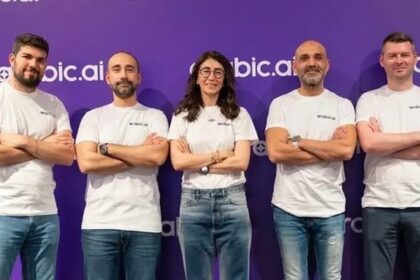
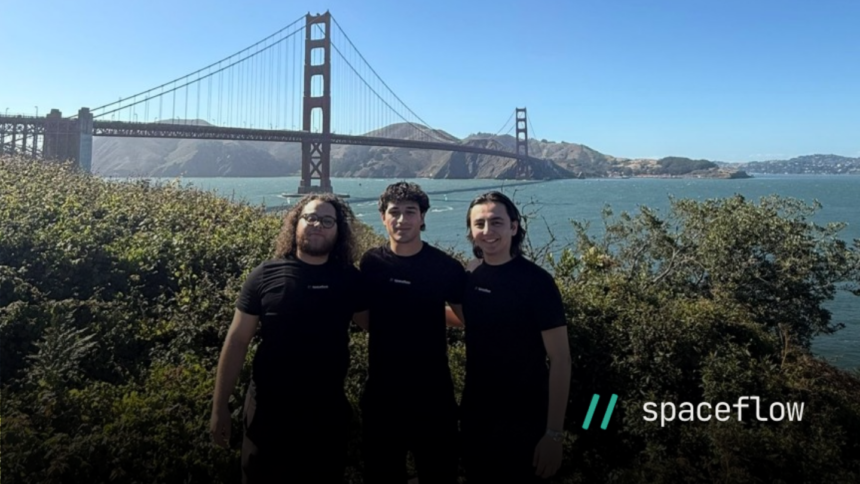
The founding team consists of Emre Işık, alongside Ali Eren Aytekin, Ali Orçun Şahinoğlu and Hakan Enes Aksu, whose academic backgrounds include the University of Cambridge, Istanbul Technical University and Boğaziçi University.
Several members of the founding team reportedly paused their university studies to focus on building the company full-time. The startup currently operates from San Francisco as it expands its presence within the global AI ecosystem.
Early commercial traction and strategic backing
Despite its early stage, Spaceflow says it has already reached six-figure annual recurring revenue through contracted customers and is working with one of Europe’s largest fast-moving consumer goods companies.
The company is also collaborating with several private equity firms as part of its expansion strategy and has attracted investment from senior executives and operators affiliated with organizations including Airbnb, Volvo Cars, Google, Encord and Sequoia Capital.
Founders see a shift toward agent-native organizations
Co-founder Ali Eren Aytekin said the company’s approach differs from traditional enterprise software by focusing on enabling AI agents to operate securely across systems that organizations already use.
“For the last 30 years, companies have continuously purchased new software applications, all designed for human users. We are doing the opposite: transforming the systems companies already use into environments that AI employees can safely operate.
Our conviction is clear: every company will soon become agent-native, and those that achieve this first will gain a significant competitive advantage. Building this in San Francisco as a Turkish team competing alongside the world’s best is a source of great pride for us.”
Why it matters
The emergence of agentic AI is increasingly shifting enterprise technology conversations away from individual productivity tools toward autonomous workflows capable of executing business operations. Startups building infrastructure that enables organizations to safely deploy AI agents across existing systems are attracting growing investor attention as enterprises search for practical AI adoption strategies.
Spaceflow’s acceptance into Y Combinator and early fundraising success also highlight the growing presence of Turkish founders within Silicon Valley’s artificial intelligence ecosystem and the increasing global ambitions of Türkiye-origin technology startups.