

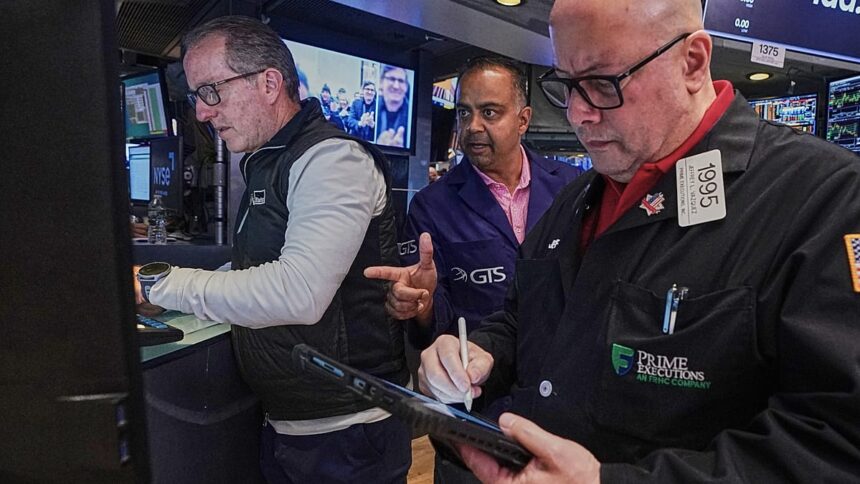
Asian stock markets mostly moved higher on Friday as investors returned to semiconductor shares following this week’s sharp technology-driven sell-off. The recovery came after concerns over elevated AI-related valuations triggered heavy losses across chipmakers, while Wall Street’s record close provided additional support for investor sentiment.
South Korea led the regional rebound, with the Kospi Index climbing more than 4% after tumbling nearly 8% in the previous session. Samsung Electronics surged 7%, while memory chip producer SK Hynix gained 4.9% as investors returned to AI-related semiconductor stocks.
Japan’s Nikkei 225 advanced around 1%, supported by a 6.6% jump in memory manufacturer Kioxia. However, chip equipment supplier Tokyo Electron slipped 2.5%, reflecting continued selectivity within the semiconductor sector.
Elsewhere across the region, Hong Kong’s Hang Seng Index gained 1.7%, China’s Shanghai Composite rose 0.7%, and Australia’s S&P/ASX 200 added 1.3%. Taiwan’s benchmark Taiex was the exception, easing 0.6%.
European Markets Opened Higher
European equities also opened in positive territory. The Euro Stoxx 50 and the broader Stoxx 600 traded within a narrow range, while the FTSE 100, DAX, CAC 40 and FTSE MIB all posted modest gains. Spain’s IBEX 35 led the region, advancing around 0.4%.
Wall Street Remains Focused on AI and Interest Rates
In the United States, the Dow Jones Industrial Average reached another record high after rising 1.1% to approximately 52,900. Meanwhile, the S&P 500 finished little changed, while the technology-heavy Nasdaq Composite declined 0.8% as semiconductor shares remained under pressure.
Investor confidence was supported by a weaker-than-expected U.S. employment report, which showed the economy added only 57,000 jobs during the month, significantly below market expectations of around 100,000. The softer labor market data strengthened hopes that inflationary pressures may continue easing, potentially reducing the need for further aggressive interest rate increases by the Federal Reserve.
AI Investment Outlook Remains Under the Spotlight
Despite Friday’s rebound, investors continue debating whether the remarkable rally in AI-related companies can be sustained over the longer term. The rapid expansion of AI infrastructure has fueled record demand for memory chips and data center hardware, but concerns remain over whether major technology companies can maintain their current pace of spending.
Several leading semiconductor stocks remained volatile throughout the week. Micron Technology fell 5.5% after losing more than 10% in the previous session, while Lam Research dropped over 10%. Nvidia, whose market capitalization remains close to US$4.7 trillion, also slipped 1.4%.
Oil and Cryptocurrency Markets
Oil prices edged higher, with Brent crude rising around 1% to approximately US$73 per barrel, while U.S. West Texas Intermediate crude gained around 0.5% to trade near US$69. Despite the rebound, both benchmarks remain below levels seen before geopolitical tensions intensified earlier this year.
Cryptocurrency-related stocks also benefited from improving market sentiment after Bitcoin gained roughly 2%, supporting shares of companies including Robinhood and Coinbase.
What Investors Are Watching Next
Attention is now turning to the next round of corporate earnings from major semiconductor companies, which are expected to provide further insight into the strength of AI-driven demand. Investors will also continue monitoring inflation data, central bank policy expectations and technology sector valuations as markets assess whether the AI investment boom represents a lasting structural shift or a more traditional semiconductor cycle.