
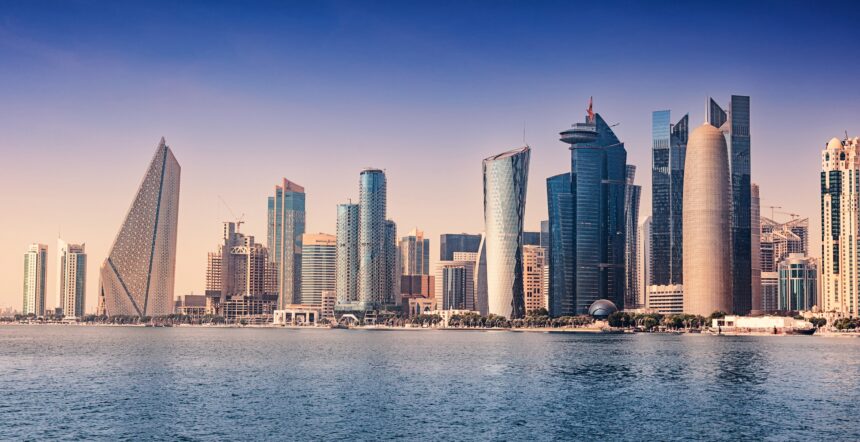
Qatar’s economy has expanded by approximately 38 times over the past three decades, according to newly released figures from the country’s International Media Office (IMO), highlighting the scale of economic transformation taking place under the country’s long-term diversification strategy.
The data showed that Qatar recorded an average annual economic growth rate of around 6% during the past fifteen years, supported by continued investment in infrastructure, manufacturing, logistics, financial services and technology.
Non-Oil Economy Continues to Expand
One of the strongest indicators of Qatar’s economic diversification efforts is the growing contribution of non-hydrocarbon sectors, which accounted for 65.5% of real gross domestic product in the latest figures.
The increase reflects the country’s ongoing efforts to reduce reliance on oil and natural gas revenues by expanding activity across industries including manufacturing, logistics, financial services, tourism and technology.
Foreign Investment Activity Remains Strong
Foreign direct investment activity also continued to grow during 2025.
Qatar’s outward foreign direct investment reached approximately QR210 billion (US$57 billion), representing an increase of 8.1% compared with the previous year.
Meanwhile, inward foreign direct investment rose to approximately QR165.4 billion (US$45 billion), reflecting annual growth of around 2%.
Manufacturing and Financial Services Drive Diversification
Manufacturing has emerged as one of the country’s fastest-growing sectors, contributing a record QR69.3 billion (US$19 billion) to the economy during 2025.
The financial sector also continued to expand, supported in part by the Qatar Investment Authority’s Fund of Funds programme, which has allocated approximately US$3 billion to support venture capital investment and startup development.
Major Infrastructure Investments Continue to Deliver Returns
Large-scale infrastructure projects continue to play a central role in Qatar’s economic strategy.
At Hamad Port, nearly half of total throughput during 2025 was generated through transshipment activity, reinforcing Qatar’s position as an increasingly important logistics and trade hub within the region.
Meanwhile, Hamad International Airport expanded its annual passenger handling capacity to more than 65 million passengers, supporting growth in aviation, tourism and international connectivity.
Qatar National Vision 2030 Remains the Guiding Framework
The latest figures form part of Qatar’s broader economic transformation agenda under Qatar National Vision 2030, which aims to build a diversified and sustainable economy supported by private sector growth, infrastructure development and investment in future-focused industries.
Key priorities include expanding private-sector financing, strengthening logistics capabilities and accelerating growth across manufacturing, technology, tourism and financial services.
Why It Matters
Qatar’s latest economic figures highlight the significant progress Gulf economies are making in diversifying beyond hydrocarbons. With non-oil sectors now accounting for nearly two-thirds of GDP and major investments continuing across logistics, manufacturing and financial services, Qatar is positioning itself for a future where economic growth is increasingly driven by knowledge industries, trade and private enterprise rather than energy exports alone.