
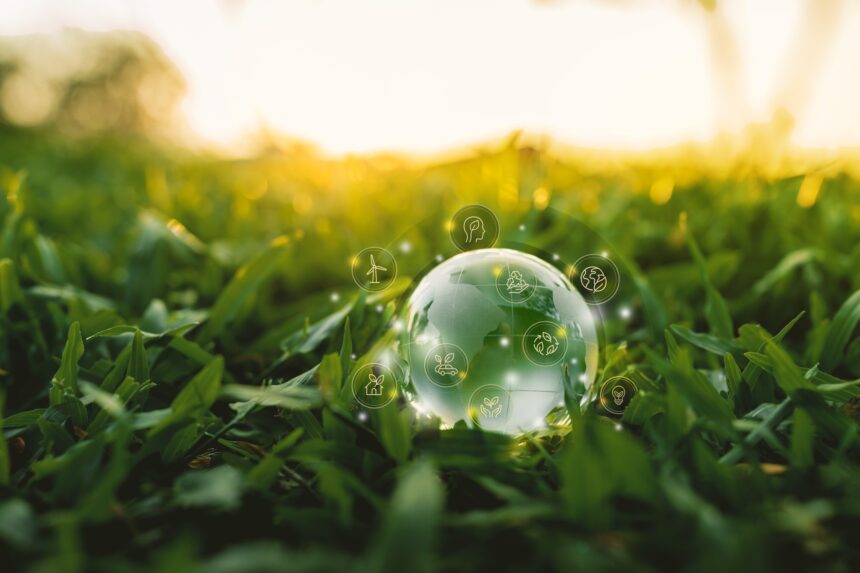
The United Arab Emirates ranked first among Arab countries in the 2026 Environmental Performance Index (EPI), according to the latest edition of the report, which evaluates countries across environmental health, ecosystem vitality, and climate change performance.
The 2026 index assesses countries using 47 indicators spanning 12 issue categories and three core policy objectives: Environmental Health, Ecosystem Vitality, and Climate Change.
According to the report, the UAE’s performance reflects continued progress across multiple environmental indicators, supported by investments in environmental infrastructure, regulatory frameworks, and the use of advanced technologies to improve monitoring, data collection, and resource management.
Environmental Stewardship as a National Priority
Dr. Amna bint Abdullah Al Dahak, UAE Minister of Climate Change and Environment, said the country’s environmental achievements build upon a long-standing national commitment to sustainability and conservation.
“The UAE’s environmental stewardship is not a recent development, but a core value woven into the nation’s fabric,” Dr. Al Dahak said.
“Building on the enduring environmental legacy of the late H.H. Sheikh Zayed bin Sultan Al Nahyan, and his visionary recognition of the importance of protecting the environment and conserving natural resources, the UAE continues to reinforce this strategic approach across government institutions, the private sector, and society.”
She added that the country’s progress reflects a whole-of-government and whole-of-society approach that has mobilized federal entities, private businesses, and local communities around shared environmental objectives.
“Guided by Net Zero 2050 Strategy the UAE accelerated decarbonisation across all industrial sectors, cementing the UAE’s leadership in the global energy transition powered by effective national policies and strategic government investments, as well as collaboration among government entities, the private sector, and community supportive engagements reinforcing the country’s position as a global model for sustainability and environmental development,” she added.
Global Leadership in Waste Management and Marine Protection
The UAE achieved a perfect score of 100 in waste management, ranking first globally in the category and highlighting the effectiveness of its waste processing and resource recovery systems.
The country also received a score of 100 for bottom trawling fisheries, reflecting the absence of bottom trawling activities within UAE maritime zones.
In wastewater treatment, the UAE achieved a score of 94.99, placing it nineteenth globally.
The report also ranked the UAE first in the Arab world and ninth globally for the protection of marine Key Biodiversity Areas (KBAs), while the country placed second regionally for marine habitat protection.
Renewable Energy Investments Accelerate
The report highlighted the UAE’s continued investment in renewable energy and low-carbon infrastructure as central drivers of its environmental performance.
The UAE Energy Strategy 2050 aims to triple the contribution of renewable energy while directing between AED150 billion and AED200 billion in investments by 2030 to meet growing energy demand.
According to the report, the country’s installed renewable energy capacity increased by 117% between 2022 and 2025, supported by landmark projects including Noor Abu Dhabi and the Mohammed bin Rashid Al Maktoum Solar Park.
The report also highlighted the recently announced 5.2GW solar photovoltaic project near Abu Dhabi, which will include a 19GWh battery energy storage system and is being developed jointly by Masdar and Emirates Water and Electricity Company (EWEC).
“With some of the largest solar plants in the world we are setting new benchmarks for the region and the world in renewable energy,” Dr. Al Dahak said.
“Our journey does not stop here. We will continue to pioneer global standards, proving that economic prosperity and environmental sustainability can and must go hand in hand.”
Technology and Nature-Based Solutions
The report highlighted a range of national initiatives supporting biodiversity conservation, water security, air quality improvements, and circular economy development.
Among these are the UAE’s National Air Quality Agenda 2031, Circular Economy Policy 2031, and the country’s target to plant 100 million mangrove trees by 2030.
According to the Ministry of Climate Change and Environment, more than 50 million mangroves have already been planted across the UAE.
The report also noted the growing use of artificial intelligence and satellite technologies to support environmental monitoring and conservation efforts, including mangrove mapping, blue carbon tracking, air quality analysis, and natural resource management.
Why It Matters
The UAE’s performance in the 2026 Environmental Performance Index highlights the increasingly important role sustainability is playing within the country’s economic diversification strategy. As global competition intensifies around clean energy, climate technologies, and environmental innovation, strong environmental performance is becoming both an economic advantage and an investment signal for countries seeking to attract capital, talent, and future industries.