
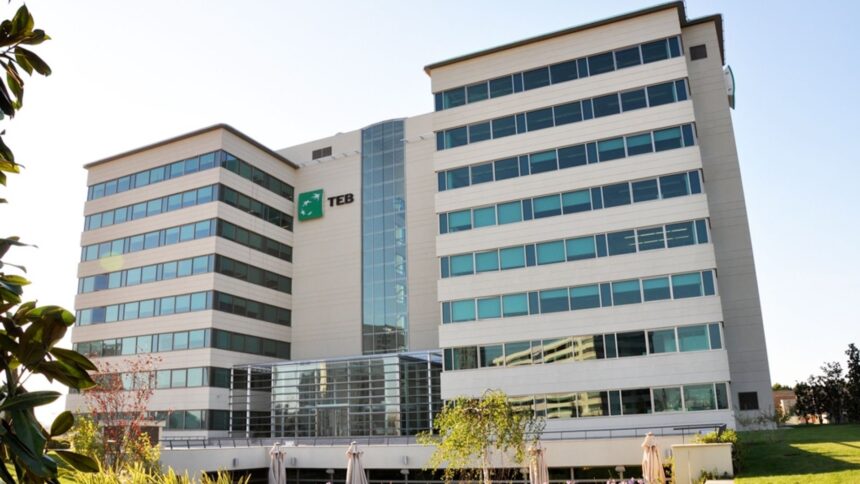
Türk Ekonomi Bankası (TEB) reported a net profit of TRY 8.86 billion for the first half of 2026, as the lender continued to strengthen its balance sheet while expanding digital banking services, SME financing, and support for women entrepreneurs.
As of June 30, 2026, TEB’s total assets reached TRY 841 billion, while total loans stood at TRY 518 billion and customer deposits totaled TRY 560 billion.
Strong Capital Position Supports Sustainable Growth
The bank said loans represented 61.63% of total assets, reflecting its continued support for households and businesses while maintaining a disciplined approach to risk management and asset quality.
Shareholders’ equity reached TRY 67.3 billion, while the bank’s capital adequacy ratio stood at 16.81%, comfortably above Türkiye’s regulatory target of 12%. The non-performing loan ratio remained at 2.91%.
Digital Banking and Customer Experience
TEB continued to execute its digital transformation strategy during the second quarter, expanding access to investment funds for retail clients while introducing digital infrastructure designed to simplify financial operations for corporate customers.
The bank said its digital platforms enable businesses to manage financial operations with greater speed, transparency, and operational flexibility.
Expanding Support for Women Entrepreneurs
TEB continued to strengthen its women-focused banking initiatives through new financing programs and advisory services.
Working with the Credit Guarantee Fund (İGE), the bank introduced financing of up to TRY 40 million for women exporters. Under the European Bank for Reconstruction and Development’s (EBRD) TurWIB program, 75% of the first €25 million tranche from a €50 million funding package was allocated to women entrepreneurs, contributing to 16% growth in lending to women-owned businesses.
TEB also launched the Women Shaping the Future Program in partnership with EBRD and supported by JPMorganChase. The initiative will provide mentoring and advisory services covering digital transformation, financial management, branding, marketing, exports, productivity, and business growth strategies.
Financial Literacy and Startup Ecosystem
Since its launch in 2012, the TEB Family Academy has reached more than 21 million people. During the first half of 2026, the academy delivered free online and in-person training to more than 5,000 participants on financial literacy, climate literacy, and women’s leadership.
The bank also expanded its support for startups by partnering with ODTÜ Teknokent and La French Tech Istanbul to bring Turkish entrepreneurs to VivaTech in Paris. TEB additionally continued its involvement in TÜBİTAK’s BiGG entrepreneurship program and the TİM TEB Entrepreneurship House accelerator initiatives.
International Funding and SME Digitalization
TEB secured the second €15 million tranche of the European Bank for Reconstruction and Development’s Digital Transformation Financing Facility (DTFF), bringing additional financing to support SMEs investing in digital technologies.
The bank also strengthened its international funding profile through its US$2 billion Euro Medium Term Note (EMTN) program. By the end of June 2026, TEB had completed 11 bond issuances, raising financing equivalent to approximately US$333.5 million from international capital markets.
International Recognition
TEB received three international awards during the second quarter of 2026. Euromoney named the bank Turkey’s Best SME Bank, while TEB Private Banking received World Finance’s Best Private Bank in Turkey award for the eighth consecutive year.
In addition, Global Finance recognized TEB as Turkey’s Best Sub-Custodian Bank as part of its World’s Best Sub-Custodian Bank Awards 2026.
Key Financial Highlights (June 30, 2026)
- Net Profit: TRY 8.86 billion
- Total Assets: TRY 841 billion
- Total Loans: TRY 518 billion
- Total Deposits: TRY 560 billion
- Shareholders’ Equity: TRY 67.3 billion
- Capital Adequacy Ratio: 16.81%
- Non-Performing Loan Ratio: 2.91%
Why It Matters
TEB’s first-half results highlight the resilience of Türkiye’s banking sector, supported by strong capital levels and disciplined lending. Beyond financial performance, the bank continues to invest in digital transformation, international funding, entrepreneurship, and women-led businesses—areas that are becoming increasingly important for sustainable economic growth and long-term competitiveness.